
CRM and sales tooling with pipelines that don't degrade.
Pipelines that don't degrade.
We run our own company on a CRM we built, Cerebro, and we've shipped variations of it to other teams. That means we design sales tooling from the inside out: stage-aware deal boards, a contact spine that survives staff turnover, and productivity tracking that's a side-effect of doing the work rather than a separate ritual nobody updates.

- 0per-seat licence fees
- 1record per contact and deal
- Cerebrothe CRM we run ourselves
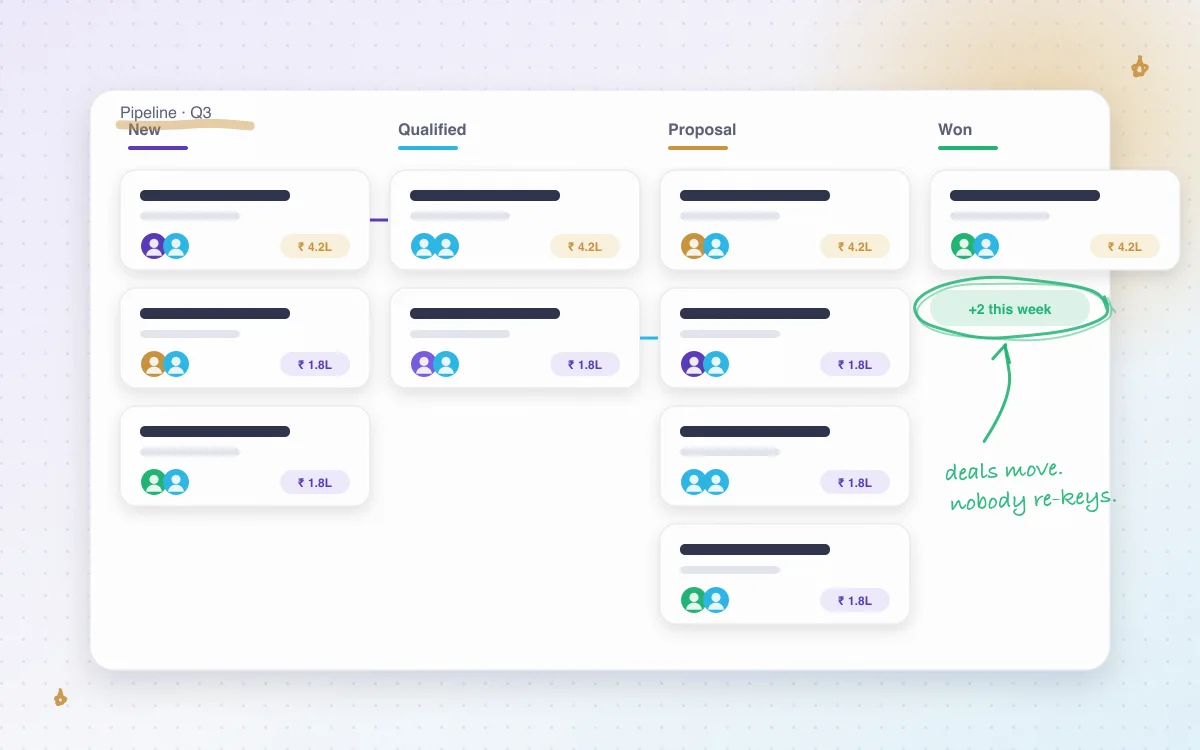
Built around how the work really flows.
A good CRM disappears into the workflow. We build admin and individual-contributor views into the same product, so leadership gets visibility without the team feeling surveilled, and the pipeline stays accurate because keeping it accurate is the easiest path.
We've built our own CRM (Cerebro) and shipped variations to other teams. Stage-aware deal boards, contact spines that survive turnover, productivity tracking that's a side-effect of doing the work, not a separate ritual.
What we build into it
- Deal boards designed around stage transitions
- Contact + project unified record
- Productivity tracking that doesn't feel like surveillance
- Admin and IC views in the same product
Who this is for
Typical stack
Cerebro CRM. A CRM built by builders.
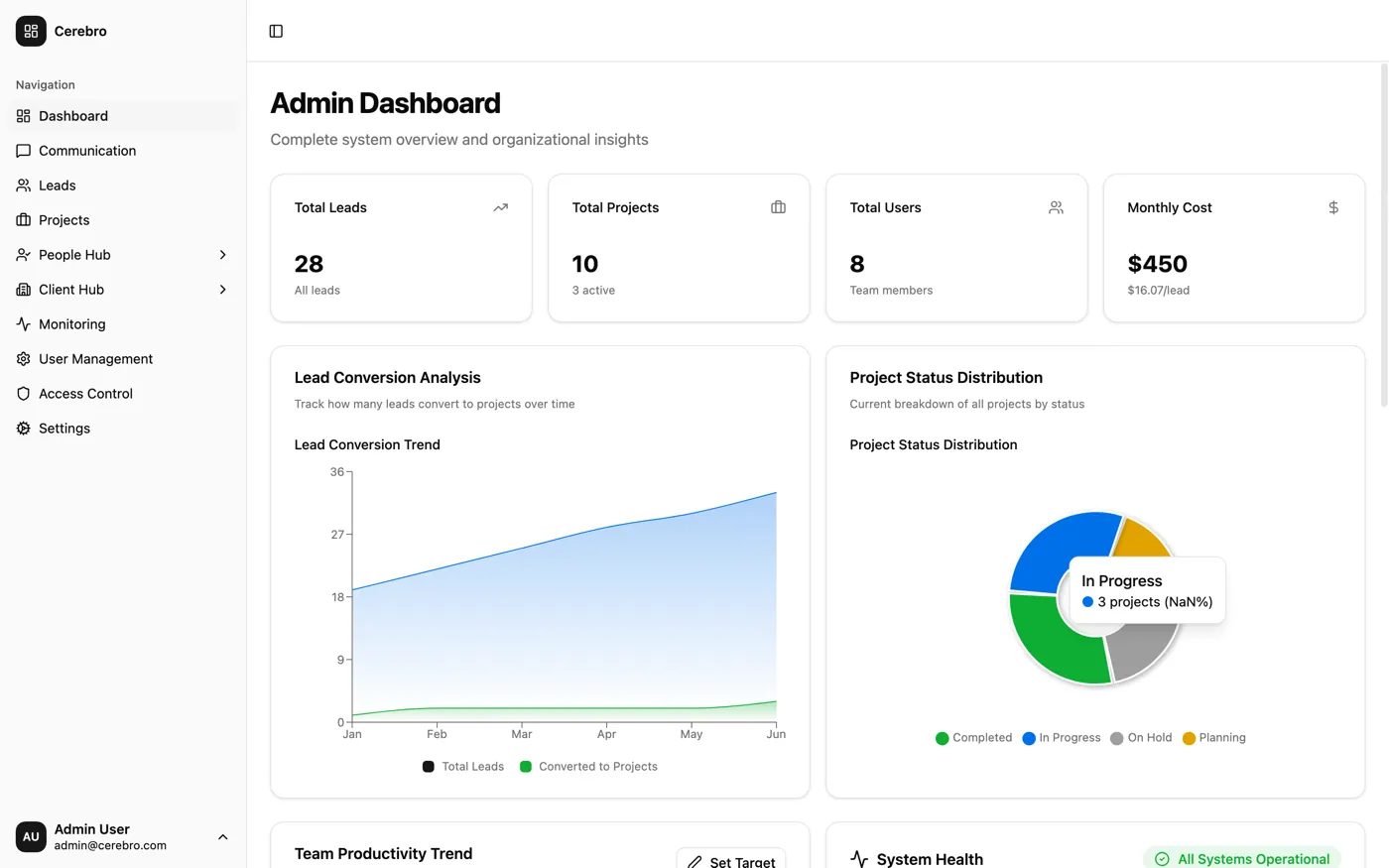
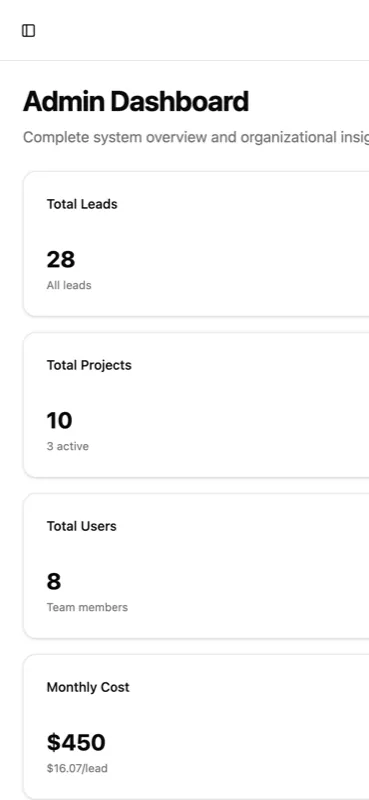
Cerebro runs Diorbit. It's the dashboard we look at when we wake up. We're now shipping it to other small teams that want a CRM they don't have to apologise for.
- 8
- Team members
- 28
- Live leads
- 10
- Active projects
Four ones. Zero theatre.
One hour to reply, one day to blueprint, one week to prototype, one month to ship. Every crm & sales tooling engagement starts in this shape.
- IWithin the hour
A real person reads your note.
The engineers who will build it are the ones who reply. No forms routing to forms.
- IIWithin the day
We sketch the system out loud.
A short conversation and a one-page blueprint of what we think you actually need.
- IIIWithin the week
Something you can touch.
A working prototype, not a Figma file. Your team presses the buttons and we adjust.
- IVWithin the month
Live. Quietly.
First version in production, your team has the keys, and we are still on Slack.
Before you get in touch.
Why build a custom CRM instead of using Salesforce or HubSpot?
Generic CRMs are powerful but generic: you pay per seat to bend your process to fit them. A custom CRM models your actual sales stages, your data, and the views each role needs, with no per-seat tax and no features you'll never use. We've run our own company on one for exactly this reason.
Can you migrate our existing CRM data?
Yes. We migrate contacts, deals and history from your existing CRM or spreadsheets, and map your current pipeline stages so the team starts on familiar ground.
Does the CRM include productivity and performance tracking?
Yes, but designed as a by-product of normal work rather than a surveillance layer. Activity and pipeline movement are captured as the team uses the product, so reporting is accurate without anyone filling in a separate tracker.



Tell us the messy version first.
You don't need a perfect brief. Tell us the problem in your own words and we'll figure out the shape of the project together.